Kinetic Catalogue Strategy

  • Home
  • Kinetic Catalogue Strategy

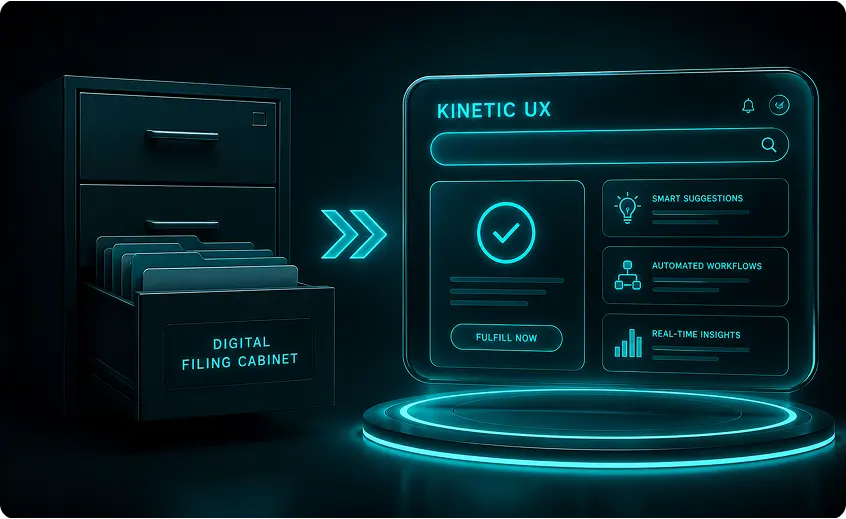
Service Catalogue Strategy: From "Digital Filing Cabinet" to "Kinetic UX"

img
At Axion AI we’ve observed a common trap: many firms build Service Catalogues that are merely "digital filing cabinets" well-organised, but ultimately static. With the ServiceNow Australia release, the goal is to shift toward Kinetic UX, where the catalogue proactively removes the distance between a user’s need and the business’s fulfilment.
Here is how we redefine the transition from a functional catalogue to a high-performance engine.


The "Interface" Evolution: Anticipatory vs. Reactive

The Old Benchmarks: Most agencies suggest "intuitive categories" and a "clean search bar." That is now the bare minimum.
The Axion AI Standard: Anticipatory Engagement.
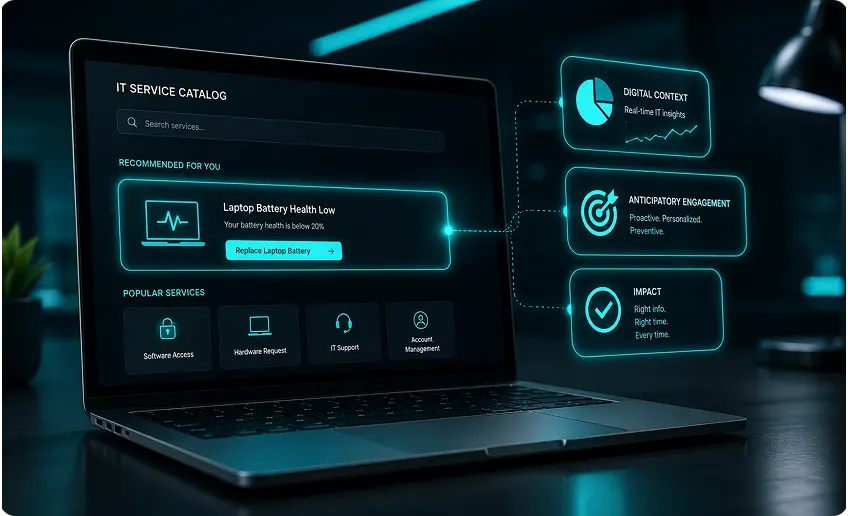
Instead of a user hunting for a specific item, the Australia release enables the catalogue to adapt based on the user's Digital Context.
  • The Difference: If a user’s laptop battery health is failing (via ITOM telemetry), the catalogue should "promote" a hardware replacement link directly to their home page before they even search for it. We aren't just making it easy to find; we’re making it impossible to miss.
img

The "Form" Philosophy: The Death of the Questionnaire

The Old Benchmarks: Traditional consulting focuses on "streamlining" forms by using "if/then" logic.
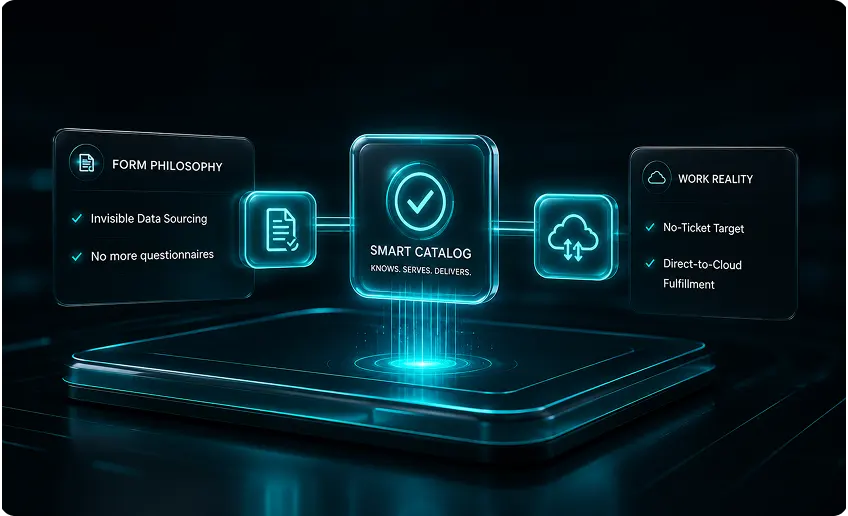
The Axion AI Standard: Invisible Data Sourcing.
A great catalogue treats every empty text field as a failure of system integration.
  • The Difference: By utilising the Australia release’s Agentic Data Harvesting, we pull a user's location, budget code, and security clearance in the background. The "Great" catalogue doesn't ask "Who are you?"; it says, "We know who you are here is exactly what you are entitled to." This turns a 5-minute task into a 10-second confirmation.

The "Work" Reality: Beyond Ticket Creation

The Old Benchmarks: Many consultants measure success by how quickly a "ticket" is created and assigned.
The Axion AI Standard: The "No-Ticket" Target.
A ticket is just a record of work that hasn't been done yet. A great catalogue bypasses the "Ticket Phase" entirely for high-frequency requests.
  • The Difference: Through Action Fabric integration, we build "Direct-to-Cloud" and "Direct-to-SaaS" fulfillments. If a developer needs a sandbox environment, the catalogue shouldn't notify a sysadmin; it should spin up the instance, apply the security tags, and send the login credentials within the same session.
img

The "Approval" Logic: Risk-Weighted Velocity

The Old Benchmarks: Standard advice focuses on "reducing approval layers."
The Axion AI Standard: Algorithmic Trust.
Using ServiceNow’s 2026 Smart Routing, we help you move away from manual "rubber-stamping."
  • The Difference: We categorise requests by "Blast Radius." Low-risk, low-cost items (under $50) should be Auto-Approved based on the user's department budget. By removing the "Approval Tax" on small items, you free up leadership to focus on high-impact strategic decisions.

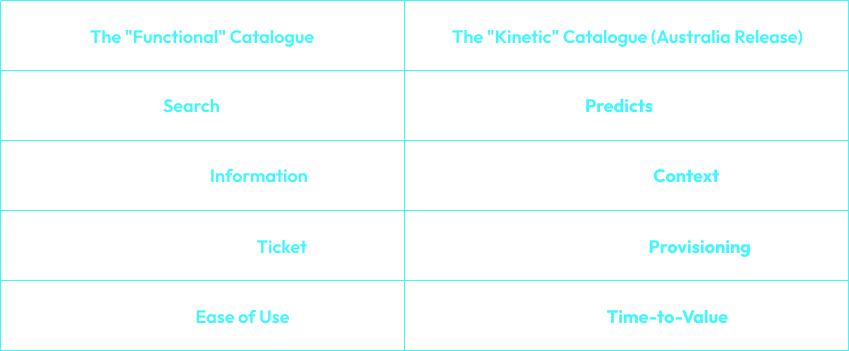
The 2026 Axion AI Comparison Matrix

img

The Bottom Line

A "Good" catalogue is a place where work goes to be requested. A "Great" catalogue is where work goes to be finished. At Axion AI we don't just design portals; we engineer fulfilment velocity.
Is your catalogue a destination or a detour?
Let’s look at your 'Australia Release' readiness. We can help you transition from static forms to autonomous action today.
If you could eliminate one 'waiting for approval' step in your most common request, how many man-hours would your team reclaim this month?